Standing water in the yard? Soggy spots that never dry? We find the low spots and install the minimum system that fixes them.
A lot of wet basements start in the yard. Downspouts dumping at the foundation, low spots that pond after every rain, window wells that fill up — handle that water outside and your basement’s job gets a lot easier.
Our approach is simple: walk the property, find where the water actually collects and where it wants to go, check your town’s rules for tying into municipal storm drainage, and then install the minimum system that works. Not the biggest system we can sell — the right one.
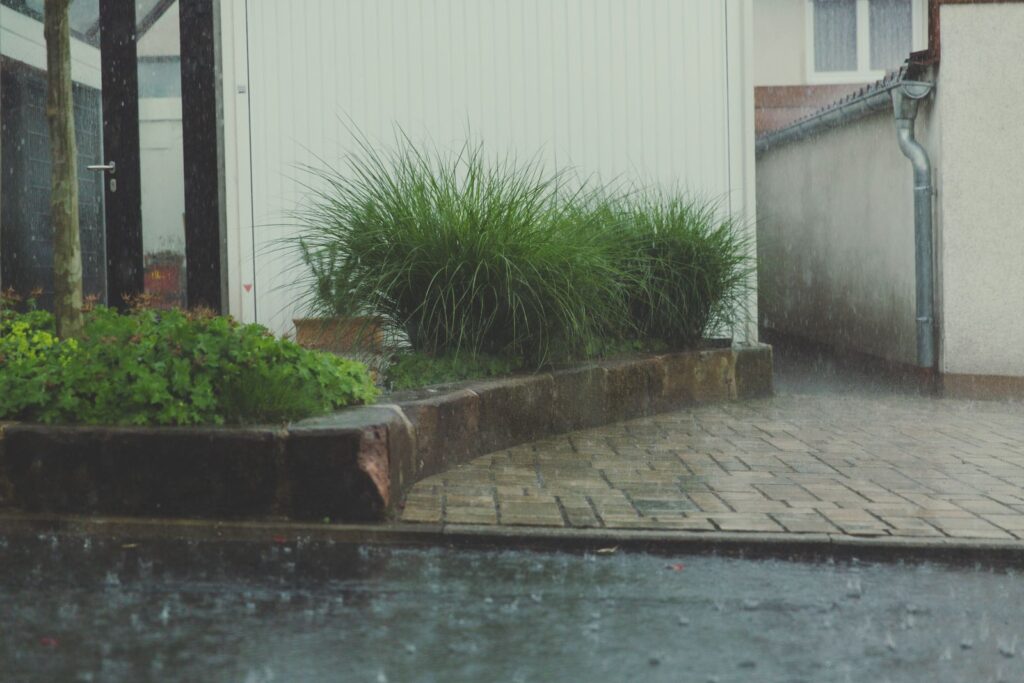
One detail that trips up DIY jobs: every town is different. Pipe material requirements and the rules for tying into municipal storm lines vary — what’s allowed in Batavia may not fly in the next town over. We check before we dig, so your system is legal as well as dry.
A surface drain (catch basin) collects water that ponds on top of the ground and moves it through solid pipe. A French drain collects water that’s soaking through the soil, using perforated pipe in a stone-and-fabric trench. Many yards need a bit of both — we’ll show you which is which on your property.
Yes — that’s usually step one. Downspouts, window wells, and sump lines all tie into the same buried system, so roof and basement water gets carried away instead of recycling back into the ground next to your foundation.
Yes, and they differ by town — both the pipe materials allowed and whether you can tie into municipal storm drainage. We check your town’s requirements before any work starts.
Sometimes — if the water’s coming from surface runoff. If it’s groundwater pushing up from below, you’ll also want interior drain tile. We’ll tell you honestly which problem you have.
Call 716-471-8389 and we’ll walk your yard, find the water, and quote the system that actually fits.